Casino games often look like pure entertainment, but there is a surprising amount of mathematics behind the scenes. Every spin, card draw, and roulette result is connected to probability. You do not need to be a mathematics expert to understand it, either. A basic look at the numbers can explain why some games feel more predictable than others and why casino strategy has limits.
For me, the interesting part is that casino mathematics is not really about predicting the next result. It is more about understanding the chances involved before making a decision.
Probability Explains What Can Happen
Probability is essentially a way of measuring how likely an event is to occur. In a simple coin toss, there are two possible outcomes, giving each side a theoretical 50% chance. Casino games are considerably more complicated because they can involve dozens of possible outcomes and different payout levels. Understanding these probabilities is also an important part of Casino Strategy, as it helps players interpret the mathematical side of different games.
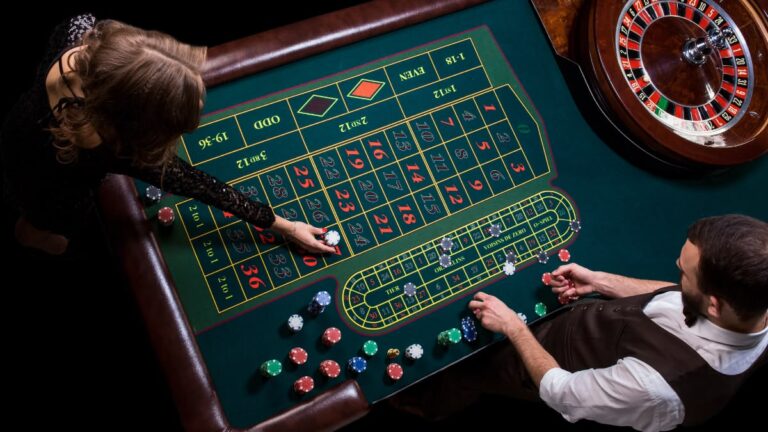
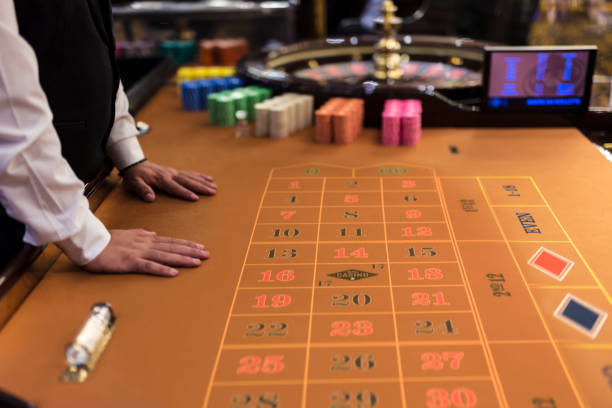
Roulette is a good example. On a standard American roulette wheel, there are 38 pockets, including numbers 1 through 36, 0, and 00. A straight-up bet on one number therefore has a probability of 1 in 38 of winning.
That number is useful because it immediately puts the game into perspective. A player can win on a single spin, but the mathematical probability does not change simply because a number has not appeared recently.
House Edge Is Part of the Equation
Another term players often hear is the house edge. It represents the casino’s mathematical advantage over a large number of bets.
The figure varies considerably between games and individual wagers. For example, the American roulette wheel has a higher house edge than the European version because it contains an additional 00 pocket. That extra pocket may seem like a small difference, but it changes the underlying probability.
This is where I think looking at the numbers becomes useful. Instead of assuming that every casino game works in exactly the same way, players can see that rules and payout structures make a real mathematical difference.
Strategy Can Improve Decisions, Not Guarantee Wins
Strategy is often discussed as though it can overcome casino mathematics. In reality, its usefulness depends heavily on the game.
Blackjack is a good example because players make decisions during each hand. Basic strategy uses mathematical probability to determine whether hitting, standing, doubling, or splitting is generally the appropriate choice for a particular situation.
Games such as roulette are different. Players can choose where to place their bets, but they cannot influence where the ball lands. Betting systems may change how someone manages their money, but they do not alter the probability of the wheel.
Why Understanding the Numbers Matters
Casino mathematics becomes easier to understand when it is viewed as a way of measuring risk rather than as a secret formula for winning. Terms such as probability, house edge, RTP, and volatility describe different parts of how games behave.
For example, a slot with a theoretical RTP of 96% is designed to return an average of $96 for every $100 wagered over a very large number of plays. That does not mean someone playing $100 will receive exactly $96 back.
Ultimately, mathematics cannot tell a player what the next spin or hand will produce. What it can do is provide a clearer picture of the odds. In my view, that is the most practical reason to understand casino math: it replaces assumptions with numbers and gives players a more realistic idea of how these games actually work.