
Casino games often appear to depend entirely on luck, but behind every spin, card, and wheel is a mathematical system. Probability helps determine how frequently different outcomes can occur, while payout structures and house edges shape the long-term financial results of a game. Understanding these numbers gives a clearer picture of why casino games produce unpredictable short-term results but follow measurable patterns over millions of plays.
The importance of these mathematical systems is reflected in the size of the modern gambling industry. The American Gaming Association reported that U.S. commercial gaming generated $78.72 billion in gross gaming revenue in 2025, representing a 9.2% increase from 2024. Traditional casino gaming generated $50.94 billion, while iGaming reached $10.74 billion.
Probability Determines Individual Outcomes
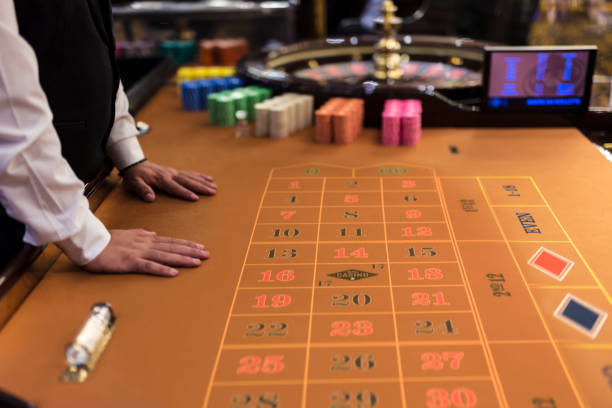
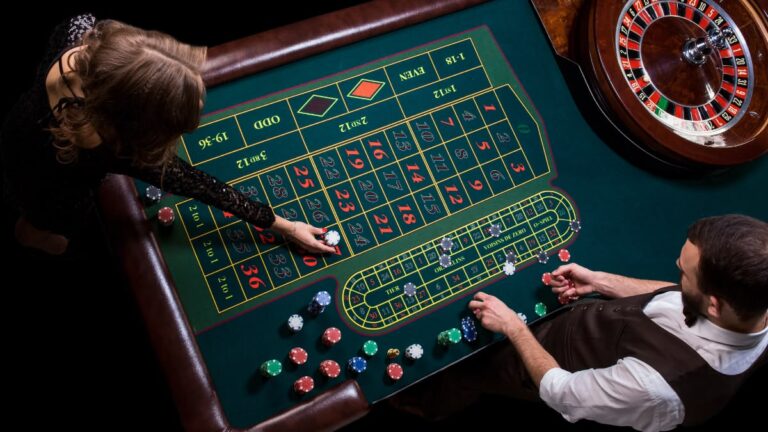
Probability describes the likelihood of a particular result occurring. Roulette provides one of the simplest examples. An American roulette wheel contains 38 pockets, numbered 1 through 36 plus 0 and 00. A straight-up bet on a single number therefore has a probability of 1 in 38, or approximately 2.63%, of winning on any individual spin.
The payout does not perfectly match those odds. A winning straight-up bet normally pays 35 to 1, while the mathematical odds are 37 to 1. The difference creates part of the casino’s house advantage.
Baccarat demonstrates another interesting statistical pattern. In an eight-deck game, Wizard of Odds calculates the probability of a Banker win at approximately 45.86%, a Player win at approximately 44.62%, and a Tie at approximately 9.52%. These percentages explain why apparently small differences in rules and payouts can have a measurable effect over a large number of hands.
House Edge Controls Long-Term Expectations
The house edge is another important mathematical concept. It represents the casino’s theoretical advantage over a large sample of wagers. It does not predict what will happen during one person’s session.
For example, Wizard of Odds’ analysis shows that the house edge on the standard baccarat Banker wager is around 1.06%, depending on the precise rules and how the calculation is defined. A small percentage can appear insignificant during a single game, but thousands or millions of wagers make the mathematical difference much more visible.
Slots use a related concept called return to player, or RTP. A game with a theoretical RTP of 96% is designed to return an average of $96 for every $100 wagered over an extremely large number of plays. It does not mean every player receives exactly $96 from every $100 spent.
Why Large Samples Matter
One of the biggest misunderstandings about casino probability is confusing long-term mathematics with short-term results. A game can produce several wins in a row even when its mathematical structure gives the casino an advantage. Similarly, a player can experience a long losing streak without changing the underlying probability of the next result.
This is known as variance. The larger the number of independent trials, the closer observed results generally tend to move toward their expected statistical values, although short-term differences can remain substantial.
Modern casino technology relies heavily on these principles. Digital games use software and random number generators to produce outcomes, while developers use probability models to establish payouts and game features.
Ultimately, mathematics does not tell players exactly what will happen on the next spin or hand. Instead, it explains the structure surrounding the result. Probability determines the likelihood of outcomes, payout ratios determine potential returns, and house edge or RTP describes the long-term mathematical relationship between wagers and expected results. Understanding these figures makes it easier to see casino gaming as a system built on statistics rather than simply a matter of luck.