The first time someone plays a casino game, probability can feel like something that belongs in a classroom rather than on a casino floor. Yet every spin, card draw, and roulette result is connected to mathematics. Once players start paying attention to the numbers, casino games can look very different from how they first appear.
I noticed this myself when comparing different casino games. At first, it was easy to focus only on the potential payout. After looking more closely at the rules, however, I started noticing details such as house edge, probability, return to player, and bet types. These numbers do not predict what will happen on the next play, but they help explain the bigger picture.
Seeing Probability Through Actual Game Decisions
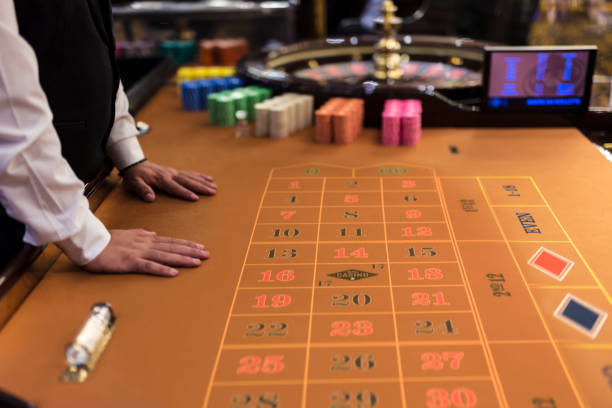
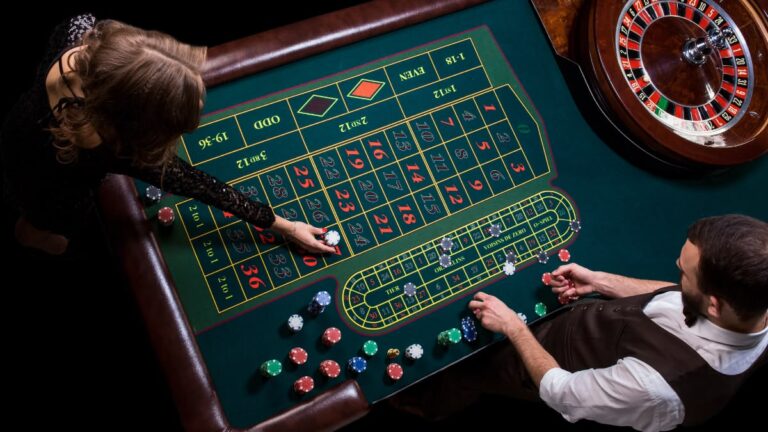
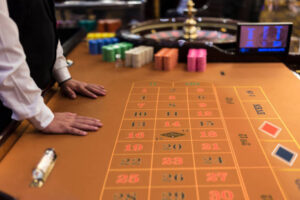
Roulette is one of the easiest games for understanding basic probability. A standard American roulette wheel has 38 pockets, including numbers 1 through 36, plus 0 and 00. A straight-up bet on one number therefore has a probability of 1 in 38 of winning.
That sounds simple until you consider the payout. A winning straight-up bet normally pays 35 to 1 rather than 37 to 1. This difference is part of the mathematical advantage held by the casino.
Playing roulette made this distinction much clearer to me. A number can feel “due” after appearing several times without showing up, but previous spins do not change the probability of the next independent spin. The wheel does not remember what happened earlier.
Blackjack provides a different experience because players have decisions to make. Whether to hit, stand, split, or double down can influence the mathematical expectation of a hand. Basic strategy tables are based on probability calculations that compare the player’s cards with the dealer’s visible card.
Why RTP and House Edge Matter
Slot games introduced another useful concept: return to player, or RTP. A slot advertised with a theoretical RTP of 96% is designed to return an average of $96 for every $100 wagered over a very large number of plays.
That does not mean putting $100 into the machine guarantees receiving $96 back. Short-term results can be dramatically different. A player might win quickly, lose several rounds in a row, or experience a long session without a significant payout.
The same idea applies to house edge. According to Wizard of Odds, a standard baccarat Banker bet has a house edge of approximately 1.06%, while the Player bet has an edge of approximately 1.24%. The Tie bet is considerably higher at around 14.36%. These figures show why understanding the rules behind a bet can matter more than simply choosing the outcome that looks attractive.
What Experience Taught Me About Casino Odds
The biggest lesson is that probability is about long-term mathematical expectations, not predicting individual results. A lucky session can happen, but luck does not change the underlying numbers.
For me, understanding probability changed the way I looked at casino games. Instead of asking which game was guaranteed to win, the more useful question became: how does this game actually work?
Knowing the odds, payout structure, RTP, and house edge gives players a clearer understanding of the risks involved. It does not eliminate uncertainty, but it can make the experience more informed and realistic.