Mathematics plays an important role in every casino game. It helps explain how likely different results are, how payouts are calculated and why the casino can have an advantage over a large number of bets.
At the same time, mathematics cannot tell us exactly what will happen on the next spin, card, roll or hand. It describes the rules and probabilities behind the game, not a guaranteed future result.
Probability Shows the Chance of an Outcome
The first important concept is probability.
Probability tells us how likely something is to happen.
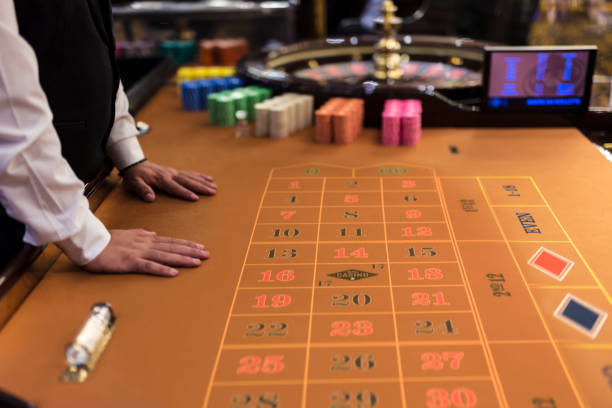
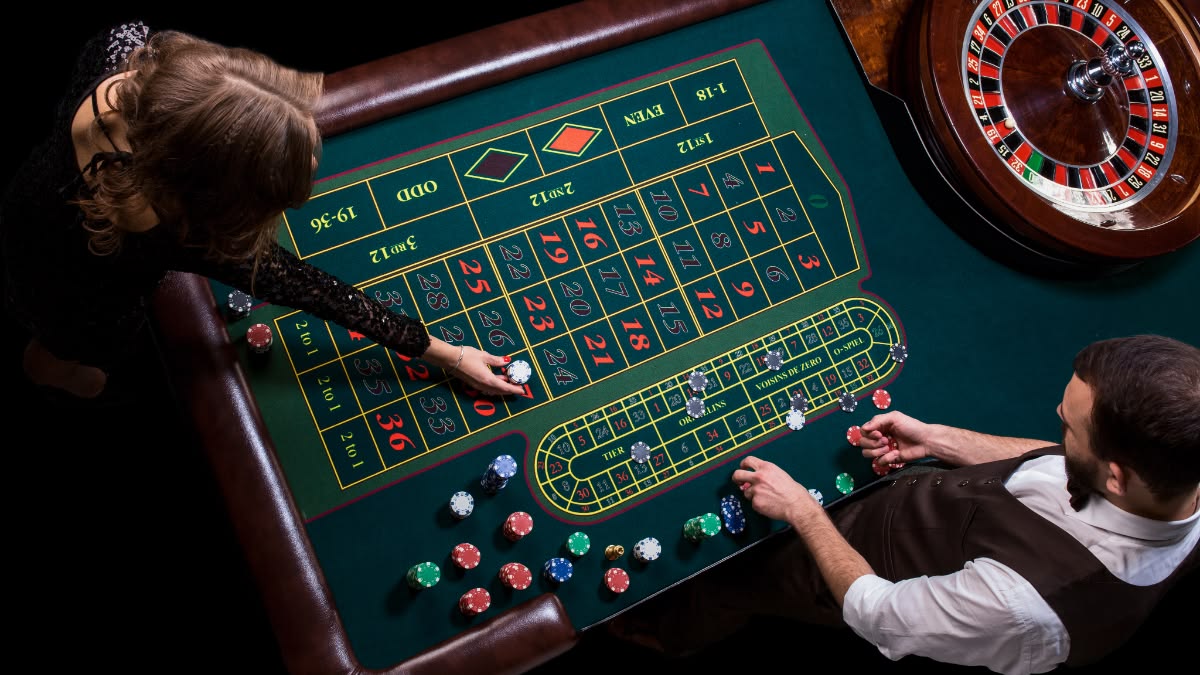
For example, a European roulette wheel has 37 pockets. A particular number therefore has a probability of:
1 ÷ 37 ≈ 2.70%
This tells us the mathematical chance of that number appearing on one spin.
It does not mean the number will appear exactly once every 37 spins.
House Edge Shows the Casino’s Advantage
Mathematics also explains the house edge.
The house edge is the theoretical advantage the casino has over a large number of wagers.
For example, standard European roulette has a house edge of approximately 2.70% on many common bets.
This advantage comes from the relationship between the wheel’s probabilities and the payouts offered by the game.
The casino does not need to win every individual bet. Its mathematical advantage is designed to appear over a much larger number of wagers.
Expected Value Shows the Long-Term Average
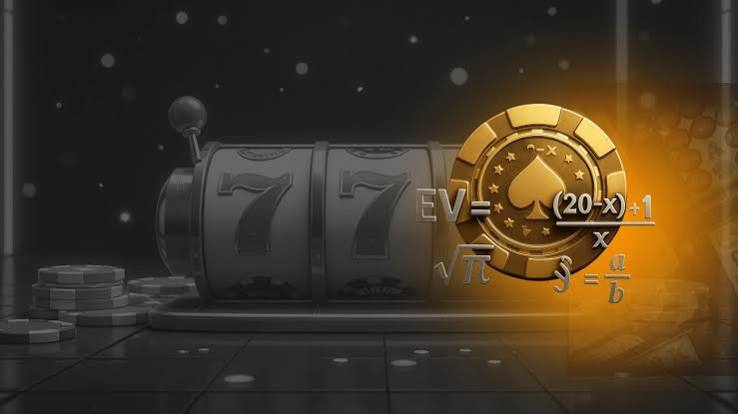
Expected value (EV) combines the probability of possible outcomes with the value of those outcomes.
For a simple example, imagine a game where there is:
- A 50% chance of winning $10
- A 50% chance of losing $8
The expected value is:
(0.50 × $10) + (0.50 × −$8) = $1
The expected value is therefore +$1 per play.
This does not mean every play produces a $1 profit. It is the mathematical average expected over many repetitions.
Casino games generally have a negative expected value for the player and a positive expected value for the house.
RTP Describes Theoretical Return
Return to Player (RTP) is another important mathematical measurement.
If a game has a theoretical RTP of 96%, its mathematical model is designed to return about 96% of wagers over a very large number of plays.
The remaining 4% represents the theoretical house edge.
The UK Gambling Commission explains that actual RTP can differ from theoretical RTP because results naturally vary, especially when a relatively small number of games are considered.
Variance Explains Changing Results
Mathematics also helps explain why two casino games with similar RTP can feel very different.
Variance describes how widely results can move around their average.
One game might produce many smaller payouts, while another might have fewer but potentially larger payouts.
This means a player can experience very different short-term results even when two games have similar long-term mathematical returns.
Large Samples Give More Information
The number of results being studied matters greatly.
Imagine flipping a fair coin only four times. You might get three heads and one tail.
If you flip it thousands of times, the percentage of heads will generally move closer to 50%.
Casino games work according to the same basic statistical principle.
A small number of spins or hands can produce unusual results. A much larger sample gives a clearer picture of the game’s mathematical behavior.
Mathematics Does Not Predict the Next Result
This is one of the most important things mathematics tells us about casino games.
Knowing that a roulette number has a 2.70% probability does not tell us when it will appear.
Likewise, knowing a slot has a particular RTP does not tell us whether the next spin will win.
Random outcomes can produce streaks, unusual results and large short-term differences.
Probability describes the chance of an outcome, but it does not remove randomness.
Past Results Do Not Automatically Change Future Probability
If a particular roulette number has not appeared for many spins, that does not automatically make it more likely to appear on the next spin.
Similarly, a number that appeared several times recently does not automatically become less likely.
For independent outcomes, each new event is evaluated according to the game’s underlying probability.
This is why ideas such as “the number is due” can be misleading when applied to independent casino outcomes.
What Mathematics Can Really Tell Us
Mathematics can answer many useful questions about casino games:
- How likely is a particular outcome?
- How much does a winning bet pay?
- What is the theoretical RTP?
- What is the house edge?
- How are results distributed?
- Why can short-term results vary?
- What happens to averages over a large number of plays?
These questions help explain the structure of a casino game without pretending that individual outcomes can be predicted.
The Bigger Picture
Casino mathematics is mainly about probability, averages and long-term patterns.
Probability explains the chance of different outcomes. Expected value explains the mathematical average. RTP measures theoretical return, house edge describes the casino’s advantage, and variance helps explain the size of short-term fluctuations.
Together, these concepts show that casino outcomes are not simply about winning or losing one individual bet. They are part of mathematical systems where rules, probabilities and payouts work together to create a defined long-term expectation.