
Casino games can produce many different outcomes, and each outcome has a mathematical chance of occurring. Some results are common, while others are rare. Understanding how often outcomes can occur helps explain why casino results may look unusual over a short period while still following the game’s mathematical rules.
Probability and Frequency Are Different
Probability tells us how likely an outcome is to happen.
Frequency tells us how often that outcome actually happened in a particular group of results.
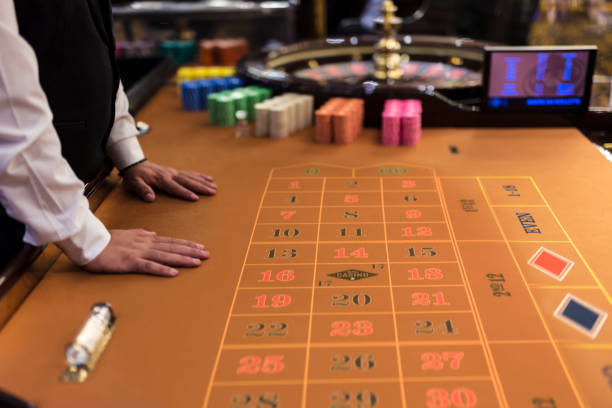
For example, a European roulette wheel has 37 pockets. The probability of a specific number appearing on one spin is:
1 ÷ 37 ≈ 2.70%
If that number appears 27 times in 1,000 spins, its actual frequency would be:
27 ÷ 1,000 × 100 = 2.7%
In this example, the observed frequency happens to match the theoretical probability closely. But actual results do not have to match the theoretical percentage exactly.
Why Results Do Not Always Match the Average
Randomness can create differences between expected and actual results.
Imagine flipping a fair coin 10 times. You might expect roughly five heads and five tails, but you could easily get six heads and four tails—or even seven and three.
The coin has not become unfair. The small number of flips simply allows random variation to have a noticeable effect.
Casino games work in much the same way.
What Happens Over More Plays?
As the number of trials increases, actual results generally become more stable around their theoretical probabilities.
This is related to the law of large numbers.
For example, if a roulette number has a theoretical probability of about 2.70%, it does not need to appear exactly 27 times in every 1,000 spins. It could appear more or fewer times.
However, when very large numbers of spins are considered, the overall frequency is generally expected to move closer to the theoretical probability.
This does not mean individual results become predictable.
Rare Outcomes Can Happen
A result with a low probability can still occur.
For example, a particular roulette number has only about a 2.70% chance of appearing on any individual spin, but it can appear twice in a row.
The probability of seeing the same particular number on two consecutive independent spins is:
1/37 × 1/37 = 1/1,369
That is approximately 0.073%.
It is unusual, but it is possible.
Importantly, after the first occurrence, the probability of that same number appearing on the next spin remains 1 in 37. The previous result does not change the basic probability of the next independent spin.
Slot Outcomes Work Differently
Slots can have thousands or even millions of possible combinations depending on their design.
Different symbol combinations can have different probabilities and payouts.
A common symbol may appear frequently and provide a small win, while a special combination may be much less common but provide a larger payout.
The exact probabilities depend on the individual game’s mathematical model.
RTP Is Based on Long-Term Results
Return to Player (RTP) also depends on looking at many outcomes.
For example, a slot with a theoretical RTP of 96% is designed so that, over a very large amount of play, the average return is expected to approach 96% of the amount wagered.
The UK Gambling Commission explains that actual RTP can differ from theoretical RTP because of normal statistical variation, particularly when fewer games are measured.
Therefore, a game can temporarily produce results that are considerably above or below its theoretical RTP.
Volatility Changes How Results Are Distributed
Not all casino games produce wins in the same pattern.
Low-volatility games tend to have smaller wins occurring more frequently, while high-volatility games can have larger wins that occur less often.
The UK Gambling Commission describes volatility in terms of how prizes are distributed and notes that it can be measured using statistical methods such as standard deviation.
This means that two games with the same RTP can still have very different sequences of results.
Why Past Results Do Not Predict the Next Result
One common mistake is assuming that an outcome is “due” because it has not appeared recently.
If a particular roulette number has not appeared for 50 spins, its probability on the next independent spin is still 1 in 37 on a European wheel.
Similarly, a number appearing several times recently does not automatically make it less likely on the next spin.
Each independent outcome is determined by the game’s underlying rules and probability.
Understanding How Often Outcomes Occur
Casino outcomes can be frequent, uncommon or extremely rare depending on their mathematical probability. Actual results can also move noticeably away from theoretical expectations over short periods.
Looking at larger samples gives a better picture of the underlying mathematics, while individual spins, rolls and hands remain uncertain.
Probability tells us how likely an outcome is, while statistics help us understand how those outcomes behave when the game is repeated many times.