Casino odds describe the likelihood of different outcomes in a casino game. In simple terms, odds help answer a basic question: How likely is a particular result to happen?
Understanding odds is closely connected to probability, payouts and house edge. However, odds and probability are not exactly the same thing.
What Do Odds Mean?
Odds are a way of comparing the chance of an event happening with the chance of it not happening.
For example, if something has a 1 in 4 chance of happening, its probability is 25%.
The odds against that event are:
3 to 1
That means there are three possible chances of it not happening for every one chance of it happening, assuming the outcomes are equally likely in this simplified example.
Odds Used in Casino Payouts
Casino games often use odds when describing payouts.
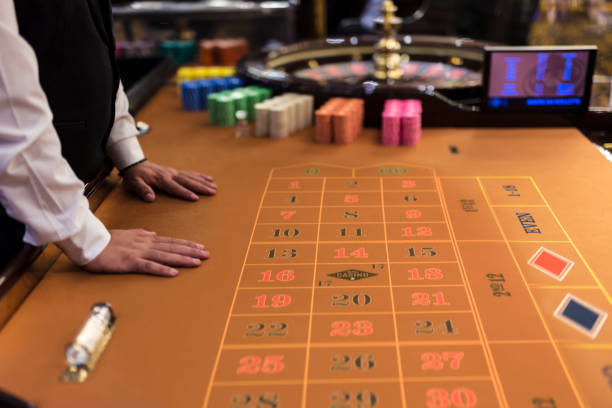
For example, a roulette bet on a single number normally pays 35 to 1.
This means that if the $1 bet wins, the player receives $35 in winnings plus the original $1 stake, subject to the game’s rules.
But the payout odds are not the same as the actual probability of winning.
On a European roulette wheel, there are 37 pockets, so the chance of hitting one particular number is:
1 ÷ 37 ≈ 2.70%
The game pays 35 to 1 even though the probability corresponds to 36 to 1 if the casino had no mathematical advantage.
That difference helps create the house edge.
Probability vs. Payout Odds
These two ideas are easy to confuse.
Probability tells you how likely an outcome is.
Payout odds tell you how much a winning bet pays.
For example:
| Measure | European Roulette Single Number |
| Chance of winning | 1 in 37 |
| Probability | About 2.70% |
| Standard payout | 35 to 1 |
The difference between the probability and the payout is an important part of the game’s mathematics.
Even-Money Bets
Roulette also offers bets such as red or black, odd or even, and high or low.
These are often called even-money bets because they normally pay 1 to 1.
At first, these bets may look like a 50/50 situation.
However, the zero pocket means a European roulette wheel has 18 red numbers, 18 black numbers and one green zero.
Therefore, a bet on red does not have a 50% chance of winning.
The probability is:
18 ÷ 37 ≈ 48.65%
The zero gives the casino its mathematical advantage.
Odds in Blackjack
Blackjack works differently because the game does not normally present simple fixed odds for every decision.
The probability of getting particular cards depends on the cards already dealt, the number of decks and the rules being used.
Players also make decisions such as hitting, standing, doubling or splitting.
Because of these factors, blackjack odds can require more detailed calculations than a straightforward roulette bet.
Odds in Baccarat
Baccarat has several betting options, including Banker, Player and Tie.
Each option has a different probability and payout structure.
For example, the Banker bet generally has a slightly higher chance of winning than the Player bet, but the standard Banker payout is usually reduced by a commission in many versions.
The Tie bet offers a larger payout but has a much lower probability of occurring.
This shows why a bigger payout does not automatically mean a better mathematical proposition.
Why Payouts Are Not the Same as Probability
A common misunderstanding is to assume that a large payout means an outcome is likely to happen.
In reality, casino games generally balance probability and payout when creating their mathematical structure.
A rare event can have a large payout, while a more common event may have a smaller payout.
The combination of these probabilities and payouts contributes to the game’s expected value and house edge.
Odds and House Edge
Casino odds are directly connected to the house advantage.
If the payout for an outcome exactly matched its true probability, a game could theoretically operate without a built-in mathematical advantage.
In many casino games, however, the payout is slightly less favorable than the probability would suggest. That difference creates the house edge.
Understanding Casino Odds
Casino odds are simply a way of looking at how likely different outcomes are and how those outcomes are paid.
Probability tells us the chance of an event occurring, while payout odds tell us what a winning wager pays.
Looking at both together gives a much clearer understanding of casino mathematics. It also explains why a bet with an attractive payout can still have a low probability of winning, and why the casino can maintain a mathematical advantage over a large number of wagers.